

Why Do Screen Enclosures Rust in Coastal Florida?
Living in coastal Florida, especially in areas like Palm Beach County, offers the luxury of beautiful beaches and warm, sunny weather. For homeowners with screen enclosures in Palm Beach County relying on salty air, humidity, and heat can lead to corrosion issues over time. In this blog, Palm Beach Aluminum explains why screen enclosures can rust in coastal areas and what homeowners can do to help prevent it.
Understanding Corrosion and Its Causes
Corrosion is a natural process that occurs when metals react with environmental elements, leading to the breakdown of the material. In coastal Florida, the combination of salt, humidity, and heat creates ideal conditions for corrosion issues. Let’s look at the specific factors contributing to this problem.
Salty Air
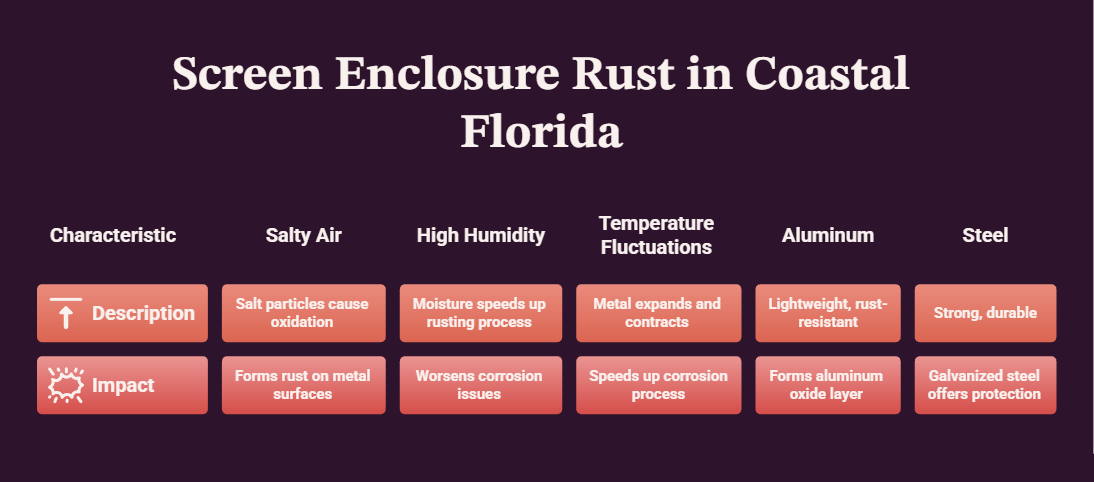
The proximity to the ocean means that the air is laden with salt particles. When these particles settle on metal surfaces, they start a chemical reaction known as oxidation. Over time, this reaction leads to the formation of rust, which is essentially iron oxide. This is especially common for screen enclosures in Palm Beach County, as they are constantly exposed to the salty air.
High Humidity Levels
Florida is known for its high humidity levels, especially during the summer months. Humidity speeds up the rusting process by providing the moisture necessary for oxidation. This moisture can get into the smallest crevices of a screen enclosure, worsening corrosion issues.
Temperature Fluctuations
Coastal Florida experiences temperature fluctuations between day and night. These changes cause metal to expand and contract, which can weaken the structure of screen enclosures over time. This strain, combined with chemical reactions, speeds up the corrosion process.
Materials Used in Screen Enclosures
The type of material used in constructing screen enclosures plays a crucial role in their susceptibility to rust. Let’s look at some common materials and their properties.
Aluminum
Aluminum is a popular choice for screen enclosures because it is lightweight and resistant to rust. However, it is not entirely immune to corrosion. Aluminum can corrode when exposed to salty air and moisture, forming aluminum oxide. While this layer of oxide can protect the underlying metal somewhat, it can still affect the enclosure’s appearance and condition over time.
Steel
Steel is another material used in screen enclosures, prized for its strength and durability. However, it is more susceptible to rust than aluminum. Galvanized steel, which is coated with a layer of zinc, offers better protection against corrosion, but it is still at risk in the coastal environment.
Preventive Measures for Screen Enclosures
While the coastal environment presents challenges, there are several steps homeowners can take to protect their screen enclosures from rust and prolong their lifespan.
Regular Maintenance
Routine maintenance is important for preventing corrosion. Regularly cleaning the enclosure with fresh water can remove salt deposits and other corrosive elements. It’s important to dry the surfaces thoroughly to prevent moisture from sitting.
Protective Coatings
Applying protective coatings can reduce the risk of rust. Powder coatings, for instance, provide a strong barrier against environmental elements. These coatings are available in various colors and finishes, allowing homeowners to improve the appearance of their enclosures while protecting them from rust.
Use of Corrosion-Resistant Materials
When constructing or renovating screen enclosures, opting for corrosion-resistant materials can make a difference. For example, using stainless steel fasteners and hardware can prevent rust from forming at joints and connections.
Professional Inspections
Engaging professionals, like those at Palm Beach Aluminum, for regular inspections can help identify early signs of corrosion. These experts can provide specific solutions to address specific issues, ensuring your screen enclosure remains in good condition.
Additional Considerations
Beyond the basic preventive measures, there are other strategies homeowners can consider to protect their screen enclosures.
Landscaping Choices
Strategic landscaping can act as a natural barrier against salty air. Planting trees and shrubs around the enclosure can reduce the amount of salt and moisture that reaches the metal surfaces, offering an additional layer of protection.
Design Modifications
Design modifications, such as incorporating drainage systems and ensuring proper ventilation, can also help reduce corrosion issues. Effective drainage prevents water from pooling around the enclosure’s base, while ventilation reduces moisture buildup.
Rust in screen enclosures is a common issue for homeowners in coastal Florida, but it is not impossible to manage. By understanding the causes of corrosion and implementing preventive measures, we can protect our investments and enjoy the benefits of these structures for years to come. Whether it’s through regular maintenance, the use of protective coatings, or professional inspections, taking early steps can make all the difference.
For more information on maintaining screen enclosures or to schedule an inspection, contact Palm Beach Aluminum and explore our aluminum services. Together, we can ensure your screen enclosures last longer and protect the coastal environment.